Hi, my name is Hémy. I have been a History student for one year by now at the cegep Lionel-Groux. I study to become an archeologist. I create that glossary list for students in this program, news students in the History program and also every one. In addition, this list content some of many jobs and relate to history, like Archeology and History. It also contained subjects and specializations that a history students can concentrate on to specialize there self and become experts in the mater. I rote this glossary because some people don't know what kind of career the History program can offer. Also, some of these words are important vocabulary that history students needed to learn and understand for the understanding of some subjects in the program.
Aerial archaeology
Aerial archaeology is the study of archaeological remains by examining them from the altitude.
Example: The Aerial archaeology make us see the Earth as if we were birds.
fr: Archéologie aérienne
Anthropological criminology
Anthropological criminology (sometimes referred to as criminal anthropology, literally a combination of the study of the human species and the study of criminals) is a field of offender profiling, based on perceived links between the nature of a crime and the personality or physical appearance of the offender. Although similar to physiognomy and phrenology, the term "criminal anthropology" is generally reserved for the works of the Italian School of criminology of the late 19th century.
Example: Darwinism inspired the field of Anthropological Criminology which suggests the criminals are less evolved than others and can't control their urge to commit crimes.
fr: Criminologie anthropologique
Anthropology
A noun
Anthropology is the scientific study of humanity, concerned with human behavior, human biology, and societies, in both the present and past, including past human species.
Example: Anthropology demands the open-mindedness with which one must look and listen, record in astonishment and wonder that which one would not have been able to guess. Margaret Mead
Read more at https://www.brainyquote.com/topics/anthropology-quotes
fr: Anthropologie
Anthrozoology
noun
Anthrozoology, also known as human–nonhuman-animal studies (HAS), is the subset of ethnobiology that deals with interactions between humans and other animals. It is an interdisciplinary field that overlaps with other disciplines including anthropology, ethnology, medicine, psychology, social work, veterinary medicine, and zoology. A major focus of anthrozoologic research is the quantifying of the positive effects of human–animal relationships on either party and the study of their interactions. It includes scholars from fields such as anthropology, sociology, biology, history, and philosophy.
Example: Since culture is a central concept of anthropology, this discipline provides an effective theoretical perspective for studying human-animal relationships.
fr: Anthrozoologie
Archaeology
noun
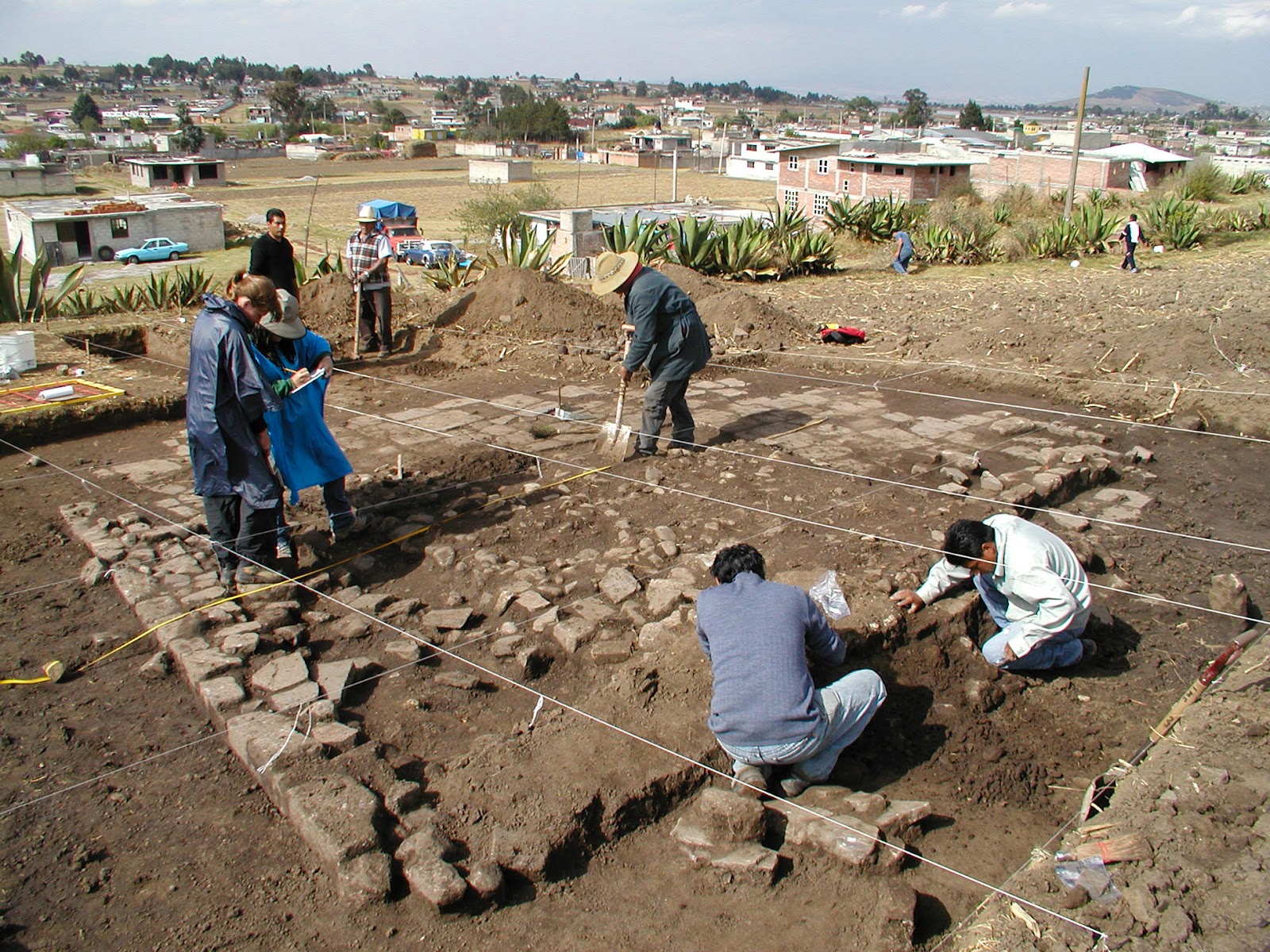
Archaeology, sometimes spelled archeology, is the study of human activity through the recovery and analysis of material culture. Archaeology is often considered a branch of socio-cultural anthropology, but archaeologists also draw from biological, geological, and environmental systems through their study of the past. The archaeological record consists of artifacts, architecture, biofacts or ecofacts and cultural landscapes. Archaeology can be considered both a social science and a branch of the humanities. In Europe it is often viewed as either a discipline in its own right or a sub-field of other disciplines, while in North America archaeology is a sub-field of anthropology. Archaeology has various goals, which range from understanding culture history to reconstructing past lifeways to documenting and explaining changes in human societies through time.Derived from the Greek, the term archaeology literally means “the study of ancient history.” The discipline involves surveying, excavation and eventually analysis of data collected to learn more about the past. In broad scope, archaeology relies on cross-disciplinary research.
Example: I want to be an archaeologist, so I will need to know a lot of things about archaeology.
fr: Archéologie
Archaeology of religion and ritual
noun
The archaeology of religion and ritual is a growing field of study within archaeology that applies ideas from religious studies, theory and methods, anthropological theory, and archaeological and historical methods and theories to the study of religion and ritual in past human societies from a material perspective.
Example: The study of ancient religion and ritual presents unique challenges to the archaeologist.
fr: Archéologie de la religion et du rituel
Classical archaeology
noun
Classical archaeology is the archaeological investigation of the Mediterranean civilizations of Ancient Greece and Ancient Rome.[1] Nineteenth-century archaeologists such as Heinrich Schliemann were drawn to study the societies they had read about in Latin and Greek texts. Many universities and foreign nations maintain excavation programs and schools in the area-such is the enduring appeal of the region's archaeology.
Example: Archaeologists or experts from this branch are specifically interested in the early cultures of the Mediterranean and the Near East, which includes Greece, Rome, Persia, Egypt, and Mesopotamia, practice Classic archaeology.
fr: Archéologie classique
Egyptology
noun
Egyptology (from Egypt and Greek -λογία, -logia. Arabic: علم المصريات) is the study of ancient Egyptian history, language, literature, religion, architecture and art from the 5th millennium BC until the end of its native religious practices in the 4th century AD. A practitioner of the discipline is an "Egyptologist". In Europe, particularly on the Continent, Egyptology is primarily regarded as being a philological discipline, while in North America it is often regarded as a branch of archaeology.
Example: the person who is an expert of Egyptology is an expert in Egypt history.
fr: Égyptologie
Etymology
noun
Etymology is the study of the history of words. By extension, the phrase "the etymology of means the origin of a particular word. For place names, there is a specific term, toponymy.
Example: The etymologies of the word " Philosophy" come from ancient Greek.
fr: Étymologie
Geography
noun
Geography (from Greek: γεωγραφία, geographia, literally "earth description") is a field of science devoted to the study of the lands, features, inhabitants, and phenomena of the Earth and planets.[1] The first person to use the word γεωγραφία was Eratosthenes (276–194 BC). Geography is an all-encompassing discipline that seeks an understanding of Earth and its human and natural complexities—not merely where objects are, but also how they have changed and come to be.
Example: A Historian need to have knowledge about Geography if he wants to do a perfect description of a historic event.
fr: Géographie
Historian
Noun
During the ancient Greece a historian was a writer of history and an authority on or specialist in history. To day a historian is describe like a scholar or writer of history. One who writes or compiles a chronological record of events; a chronicler.
Example: The historian observes and records, in different lands and ages, the rise or explicit utterance of belief in one God.
fr: Historien
Historical sociology
Noun
Historical sociology is a branch of sociology focusing on how societies develop through history. It looks at how social structures that many regard as natural are in fact shaped by complex social processes. The structure in turn shapes institutions and organizations, which affect the society - resulting in phenomena ranging from gender bias and income inequality to war.
Example: Today, the best historical sociology combines precision in theory-construction with the careful selection of appropriate methodologies to address ongoing debates across a range of subfields.
fr: Sociologie historique
History
Noun
History (from Greek ἱστορία, historia, meaning "inquiry; knowledge acquired by investigation") is the study of the past. Events occurring before the invention of writing systems are considered prehistory. "History" is an umbrella term that relates to past events as well as the memory, discovery, collection, organization, presentation, and interpretation of information about these events. Historians place the past in context using historical sources such as written documents, oral accounts, ecological markers, and material objects including art and artifacts.
Example: I love France history, because this country is one one of the oldest countries.
fr: l'Histoire
History of archaeology
Noun
It is the history of the practice of archaeology. In other words, it is the time line of the archaeology itself, so when it start. The history of archaeology is a specialty of the history of science. Its object is the historical development of archaeology as a scientific field, in its intellectual, social and institutional aspects. Speeches on the past have been produced at all times and in all places by different societies; However, the ambition to provide a scientific basis for this discourse and this knowledge did not develop until the 19th century. The object of the history of archaeology is this development.
Example: I am interesting on the history of archaeology.
fr: L'histoire de l'archéologie
History of literature
Noun
The history of literature is the historical development of writings in prose or poetry that attempt to provide entertainment, enlightenment, or instruction to the reader/listener/observer, as well as the development of the literary techniques used in the communication of these pieces. Not all writings constitute literature. Some recorded materials, such as compilations of data (e.g., a check register) are not considered literature, and this article relates only to the evolution of the works defined above.
Example: To know when and where literature became an art, we have to go far back in time. The history of literature is hold and complicated.
fr: Histoire de la littérature
History of philosophy
Noun
It is the time line and the full history of Philosophy itself.
Example: The history of philosophy start in Greek.
fr: Histoire de la philosophie
Lexicology
Noun
Lexicology is the part of linguistics that studies words. This may include their nature and function as symbols, their meaning, the relationship of their meaning to epistemology in general, and the rules of their composition from smaller elements (morphemes such as the English -ed marker for past or un- for negation; and phonemes as basic sound units). Lexicology also involves relations between words, which may involve semantics (for example, love vs. affection), derivation (for example, fathom vs. unfathomably), use and sociolinguistic distinctions (for example, flesh vs. meat), and any other issues involved in analyzing the whole lexicon of a language.
Example: Her current interest areas are lexicology and intercultural communication.
fr: Lexicologie
Maritime archaeology
noun
Archaeology (also known as marine archaeology) is a discipline within archaeology as a whole that specifically studies human interaction with the sea, lakes and rivers through the study of associated physical remains, be they vessels, shore-side facilities, port-related structures, cargoes, human remains and submerged landscapes. A specialty within maritime archaeology is nautical archaeology, which studies ship construction and use. As with archaeology as a whole, maritime archaeology can be practised within the historical, industrial, or prehistoric periods.
Example: Maritime archaeology can help us understand the history of the maritime world. people how do that job can visit a ship wreck and discover how they were built.
fr: Archéologie maritime
Mythology
Noun
"Mythology" redirects here. For the term used to describe the overarching plot of a fictional work (often for television shows), see Mythology (fiction). For other uses, see Mythology (disambiguation). In present use, mythology usually refers to the collected myths of a group of people, but may also mean the study of such myths. For example, Greek mythology, Roman mythology, and Hittite mythology all describe the body of myths retold among those cultures. Folklorist Alan Dundes defines myth as a sacred narrative that explains how the world and humanity evolved into their present form. Dundes classified a sacred narrative as "a story that serves to define the fundamental worldview of a culture by explaining aspects of the natural world and delineating the psychological and social practices and ideals of a society." Anthropologist Bruce Lincoln defines myth as "ideology in narrative form."
Example: The ancient Egyptians mythology is fascinating.
fr: Mythologie
Sociolinguistics
Noun
Sociolinguistics is the descriptive study of the effect of any and all aspects of society, including cultural norms, expectations, and context, on the way language is used, and society's effect on language. It differs from sociology of language, which focuses on the effect of language on society. Sociolinguistics overlaps considerably with pragmatics. It is closely related to linguistic anthropology; some question the distinction between the two fields, emphasizing their historical interrelation. It also studies how language varieties differ between groups separated by certain social variables (e.g., ethnicity, religion, status, gender, level of education, age, etc.) and how creation and adherence to these rules is used to categorize individuals in social or socioeconomic classes. As the usage of a language varies from place to place, language usage also varies among social classes, and it is these sociolects that sociolinguistics studies.
Example: speaking, Conversation analysis and Interactional SOCIOLINGUISTICS, all of which are methods used in linguistics.